
Food Security
When the harvest fails: What 49 Kwania households told us about hunger
A July 2026 GVC assessment in one Kwania District village found crop failure, empty food stores, reduced meals, and urgent requests for a 30-day food bridge.
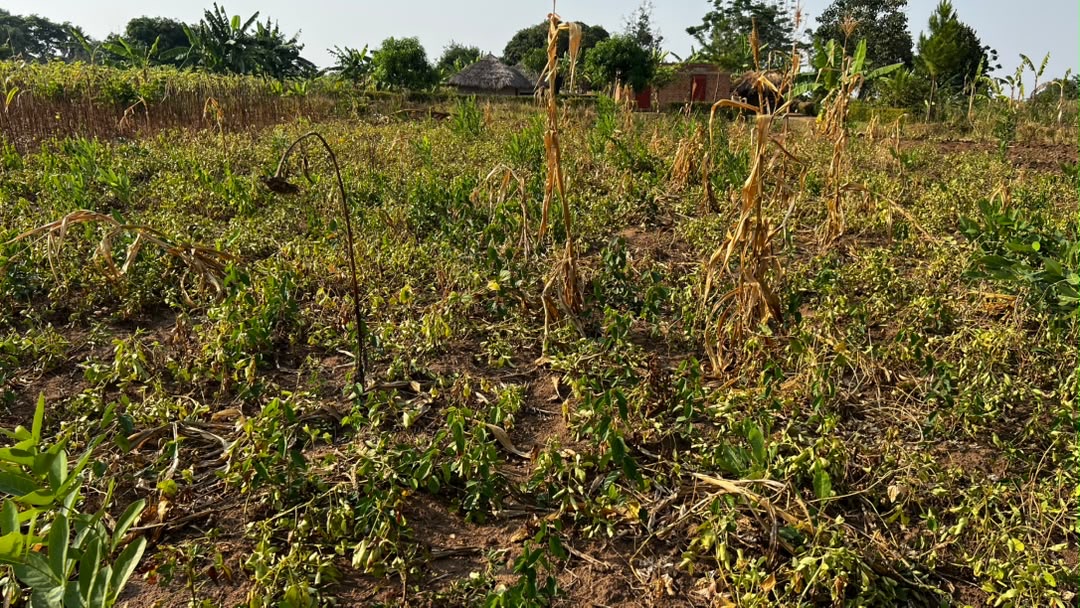
In March, households in one Kwania District village planted the crops that were supposed to carry them through the next season. Groundnuts and sunflower were expected to bring in cash. Maize, beans, cassava, and sweet potatoes were expected to become food.
The harvest did not come.
When the village chairman contacted Global Village Connect’s treasurer and requested help, GVC Country Manager Phoebe and team member Honest visited the community on July 10, 2026. They walked through failed gardens, looked inside household food stores, interviewed families, and completed a structured assessment with 49 households representing 372 people.
What they found was not a general impression of hardship. It was a measurable, localized food emergency.
The request came from the village
GVC did not select this village through a public campaign or arrive with a predetermined project. The request came directly from the village leadership. Our field team then assessed the need before proposing a response.
The 49 participating households included 134 children under age 10 and 38 adults over age 70. Forty-six households said subsistence farming was their primary livelihood. For families living from one harvest to the next, a failed season removes both food and the income that might have been used to purchase it.
Residents told our team that meaningful rain had not fallen locally since February. Most planted during the usual March season. Heat and prolonged dryness then scorched food and cash crops, including cassava and sweet potatoes that households considered more resilient.
A garden documented during the July 10 field visit. Households reported that crops planted in March withered before producing a usable harvest.
What 49 households reported
The assessment describes one village that requested assistance. It is not a survey of every household in Kwania District. Within this 49-household sample, however, the findings were consistent and severe:
- 47 households had no food stored. One reported less than two days of food and one reported two days.
- 45 households ate one meal the previous day. Four ate none.
- 46 households planted crops. Forty-three reported complete crop failure and three reported a very poor harvest.
- All 46 planting households identified drought as the cause of their losses.
- 46 households said they often skipped meals or went a full day without eating. Three said this happened sometimes.
- 40 households had borrowed money to buy food.
- 37 had reduced adults’ meals so children could eat.
- 20 had sold livestock and 20 had sent someone elsewhere to look for food.
- 21 of 48 responding households reported children missing school because of food shortages.
- 22 households reported that a pregnant or breastfeeding household member was struggling to obtain enough food.
Every participating household requested food assistance and rated the need as extremely urgent.
These numbers describe how a failed harvest moves through a household. It first empties the garden, then the granary. Families borrow. Adults reduce their portions. Livestock that might have protected the household later is sold to meet the need today. Children begin missing school.
What the field photographs show
The photographs do not replace the survey. They show what several of its answers looked like on the day our team visited.
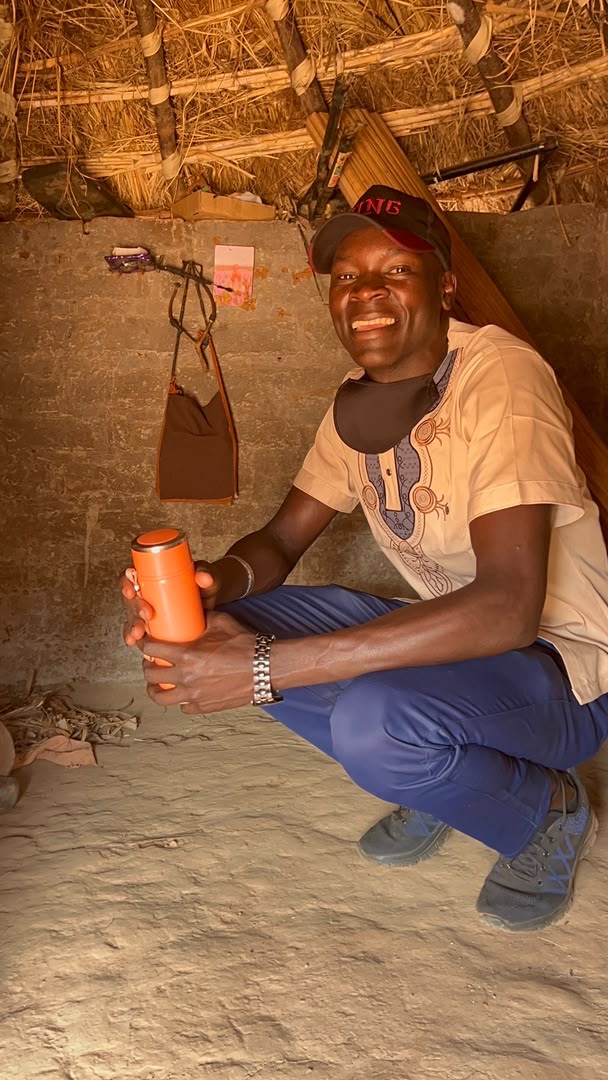
A household granary documented during the July 10 field visit contained no stored food.
In one household, the field team found a small amount of pale beans. Phoebe explained that families in the area rarely choose this variety because it takes a long time to prepare and has little taste. In the village it is associated with periods of hardship. Among the households visited, this was the only family where the team saw even this food available.
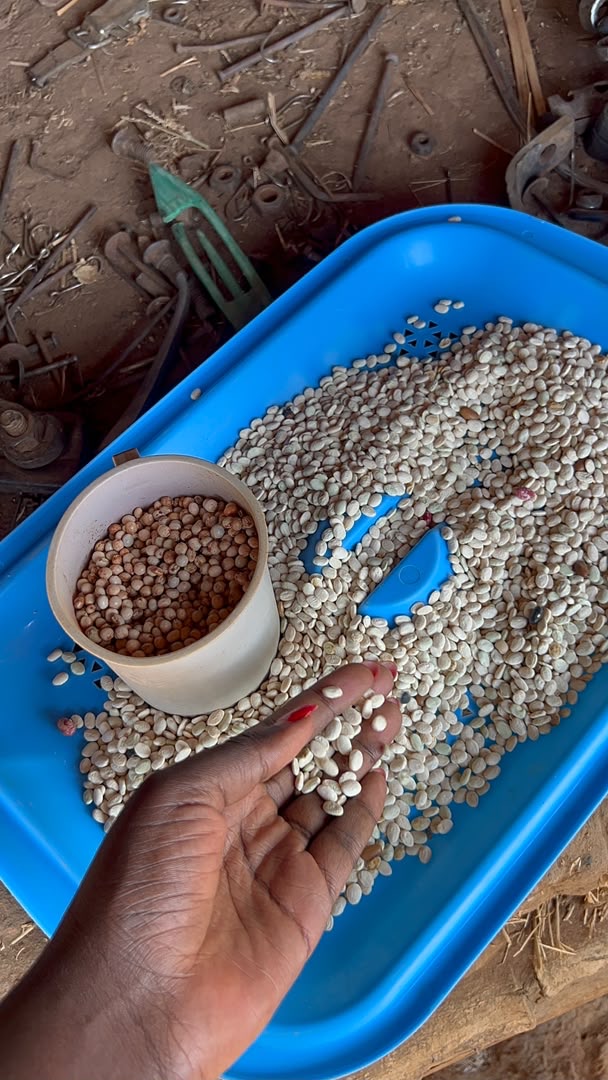
The only beans our field team found during the household visits. This observation is not a nutritional assessment.
Another farmer showed the groundnuts remaining after planting a substantially larger area. The plants had withered and dried before producing the harvest she expected.
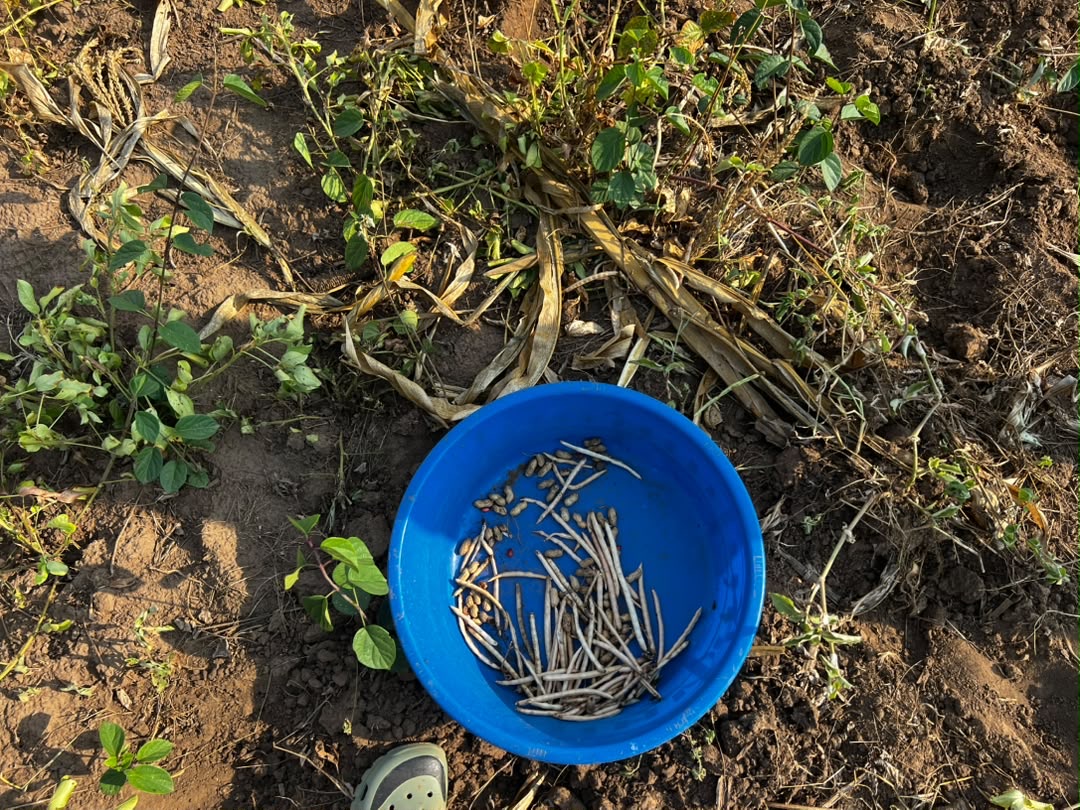
The remaining groundnuts shown to GVC’s field team after the farmer’s crop withered.
Phoebe also reported that families had boiled immature mangoes into porridge before the normal mango season. That kind of substitution matters: it indicates that households were no longer choosing among ordinary foods, but searching for anything available.
A severe local pocket inside a wider regional picture
The village findings sit within a period of difficult weather, but they should not be stretched into a claim about all of Uganda.
In July 2026, Uganda’s Ministry of Water and Environment forecast hotter and drier conditions across the country, with northern and eastern areas expected to receive only isolated light rainfall, according to a briefing published by Uganda’s Parliament. The regional climate center ICPAC also documented moderate-to-severe dry conditions in parts of Uganda during March-May 2026.
At the same time, the June 2026 FEWS NET Uganda outlook anticipated near-average harvests in many bimodal areas despite uneven rainfall. That broader outlook does not invalidate what 49 Kwania households reported. It shows why local assessment matters: a national or regional picture can look relatively stable while one small farming village experiences crop failure and exhausted food stocks.
Kwania has also experienced the opposite weather extreme. Flooding around Lake Kwania previously displaced residents and made roads impassable, as documented by Uganda’s National Water and Sewerage Corporation. Our team passed an area that had required canoes during earlier flooding and found it dry in July. This history provides context for repeated weather shocks, but our assessment does not claim that the earlier flood caused the current crop failure.
The original 30-day response plan
GVC has delivered food relief following this assessment. The original plan was a 30-day emergency food bridge for the assessed households. Its published operational budget was $4,738.79 and included approximately:
- 3,042.6 kilograms of maize flour
- 1,885 kilograms of beans
- bags, sealing, loading, and local transportation
- necessary banking, tax, and field-lodging costs in the source budget
This was a staple-food bridge, not a claim of complete nutrition. Its purpose was immediate: help households eat during the 30-day response period while the community and GVC assessed what recovery would require.
The original campaign goal was $6,000. The plan allocated the first $4,739 to food and distribution, with up to $1,261 for changes in food or transportation prices, monitoring, and verified follow-up needs in the affected village. These are planned figures, not a final spending report or a new fundraising target. The original appeal reserved any remaining funds for verified Kwania food-security and recovery needs.
Review the Kwania food relief assessment and response plan.
Preparing for the next emergency
The Kwania food distribution has taken place. The campaign continues as GVC’s ongoing Emergency Aid Fund, helping build resources before another urgent request arrives. Continued giving supports preparation, assessment of emerging needs, and locally verified emergency assistance within communities where GVC has trusted relationships.
Learn how the Emergency Aid Fund works.
Support the ongoing Emergency Aid Fund through Give Lively.
Reporting after distribution
The ongoing fund will support future responses, while reporting on the Kwania distribution continues. The next reporting step is to publish:
- total funds received and spent
- quantities of food purchased
- purchase and distribution dates
- households and people reached
- photographs from procurement and distribution
- differences between the proposed and actual budget
- follow-up findings and any remaining verified needs
This creates a direct evidence trail from request, to assessment, to response, to reported outcome.
Methodology and limitations
GVC conducted the field visit on July 10, 2026. Survey responses were recorded or finalized electronically on July 11. The assessment covered 49 consenting households in one village whose chairman had requested assistance. It combined a structured household questionnaire with interviews and direct field observation.
The findings are self-reported and should not be generalized to Kwania District or Uganda. One question allowed caregivers to select visible health concerns, but GVC did not conduct clinical nutrition screening and does not treat those responses as diagnoses. This assessment does not classify famine or assign an Integrated Food Security Phase Classification level.
Sources
- Parliament of Uganda: Hot and drier weather expected throughout July 2026
- ICPAC: Observed climate conditions for March-May 2026
- FEWS NET: Uganda Food Security Outlook, June 2026
- National Water and Sewerage Corporation: Interventions following Lake Kwania floods
- GVC Kwania household food-security assessment, July 2026
More Field Notes
Keep reading
Period poverty in Uganda: What 173 girls told us about missing school
A 173-student assessment at Buyanga Primary School documents how cost, pain, inadequate materials, and stigma affect girls' attendance in rural Uganda.
Bridging the gap between schooling and employment
An honest look at the transition after school for two GVC-supported students, and why academic schooling without vocational options can leave girls behind.