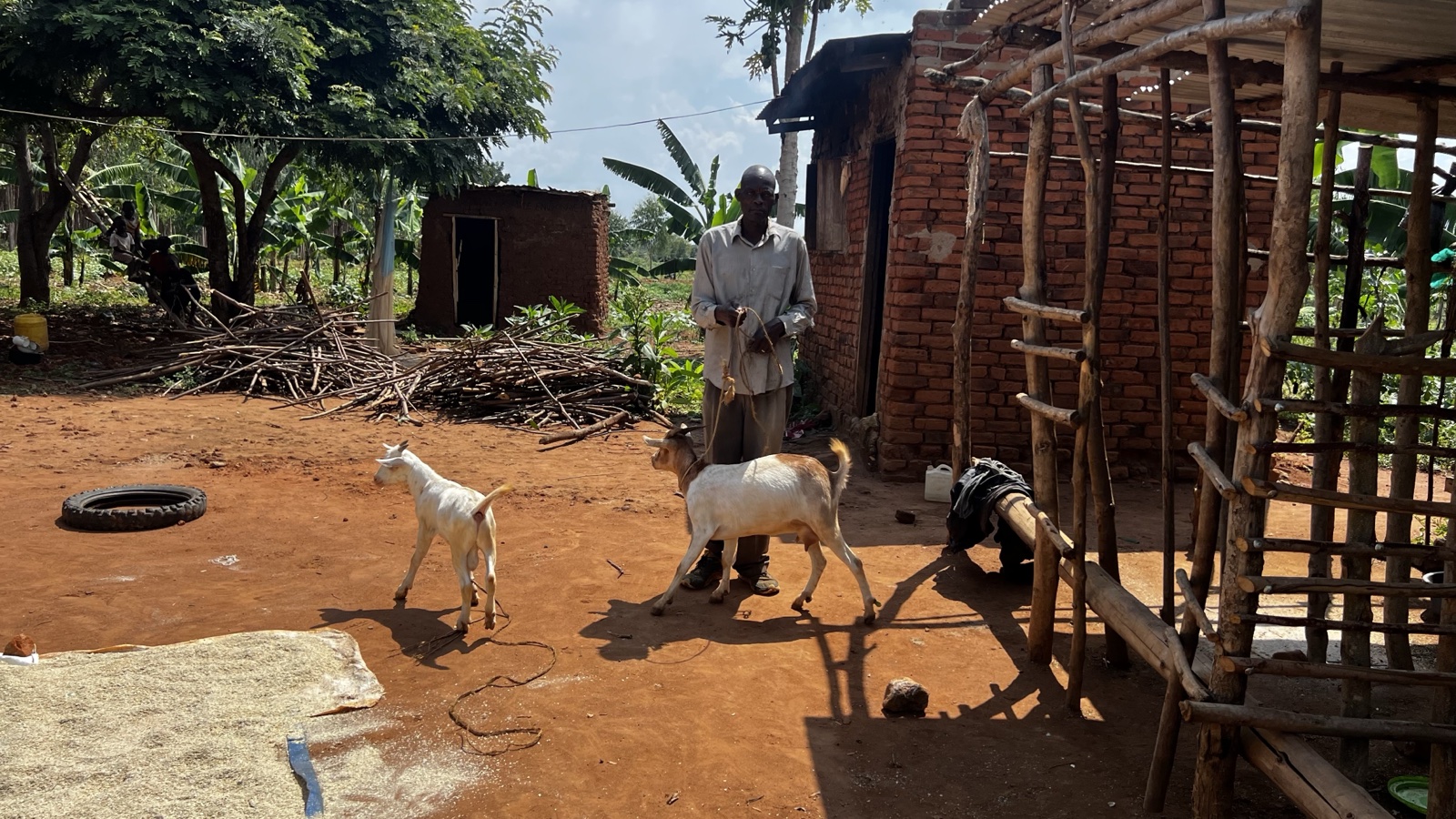
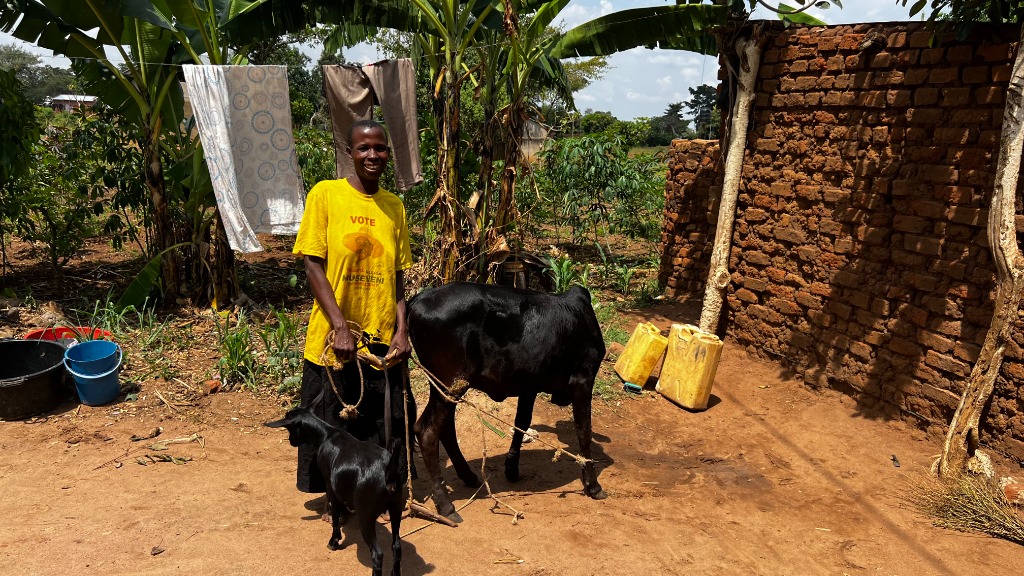
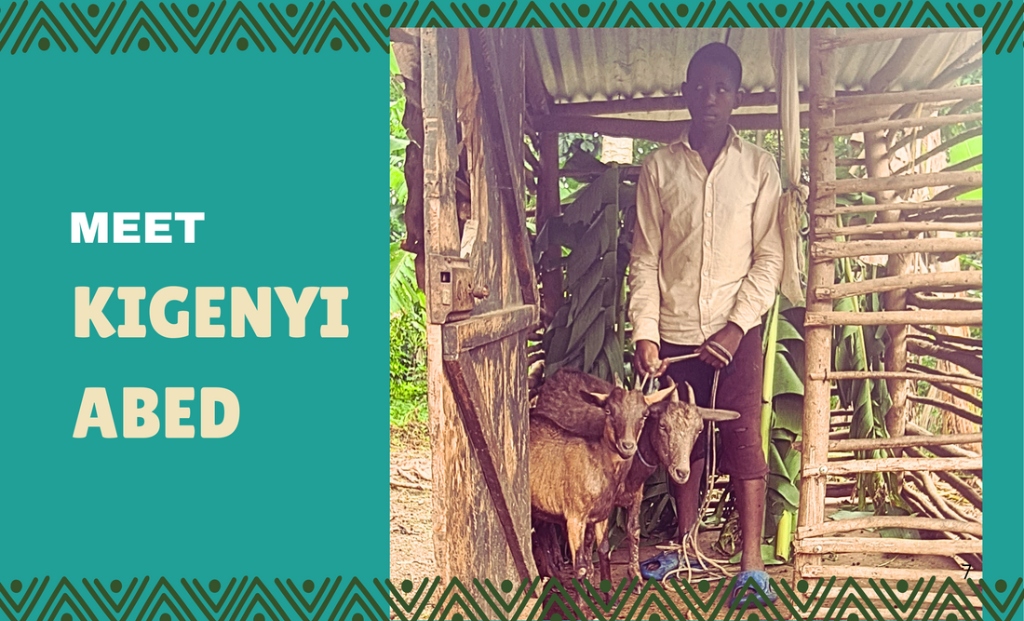
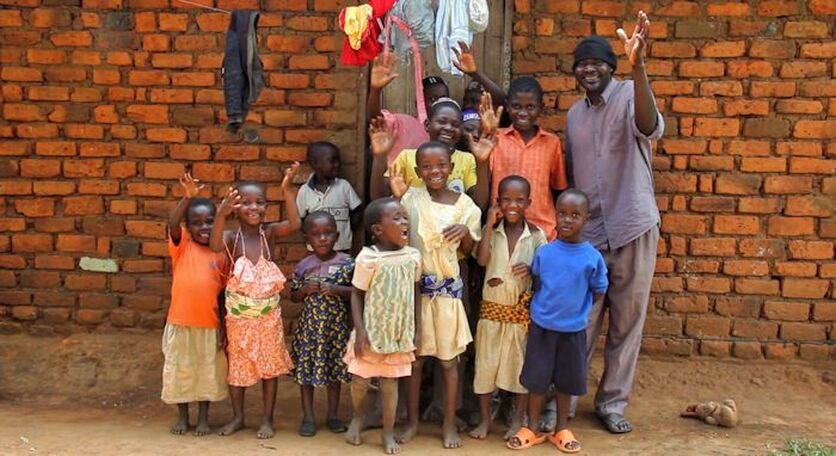
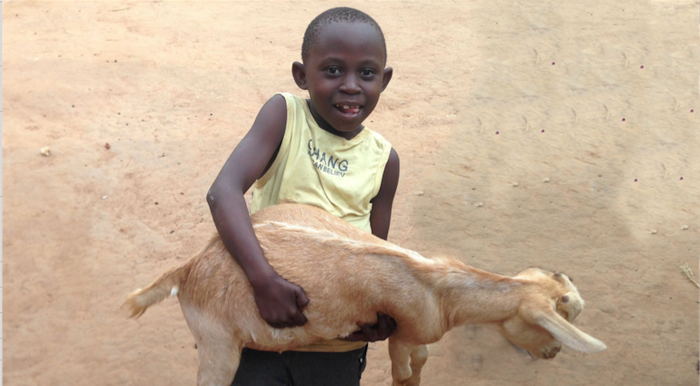
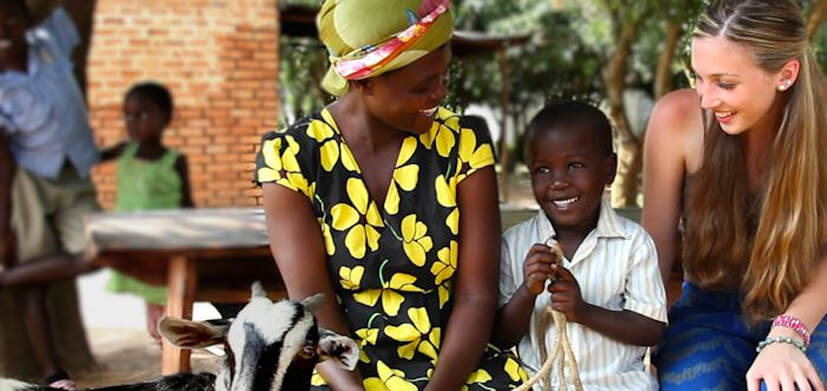
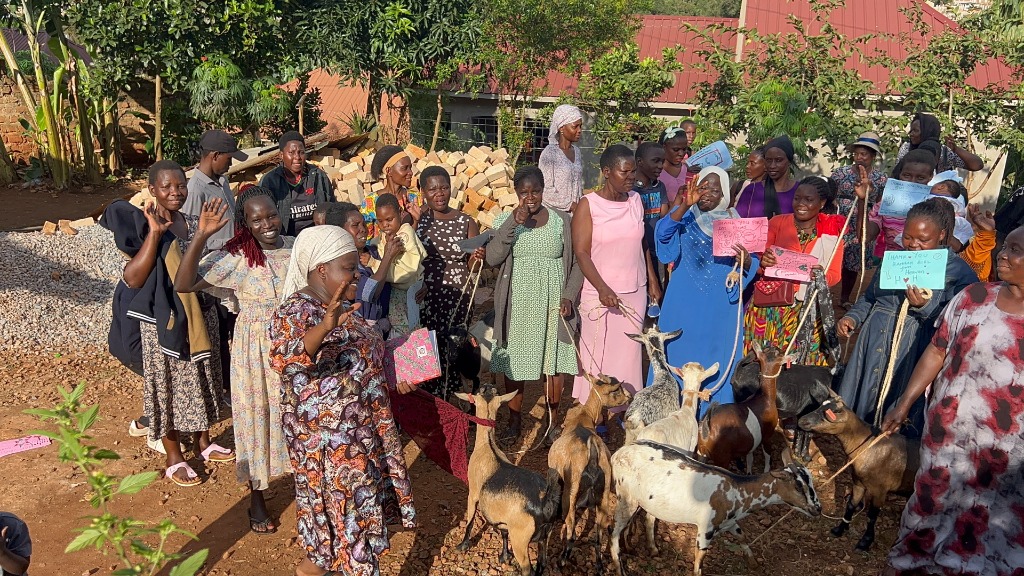
Ugandan families gathered with sponsored milk goats during a Global Village Connect goat distribution
Give a Goat · Livelihoods Program

One goat. A herd. A different future.

In rural Uganda, a single fertile milk goat can change a family's entire trajectory: eight cups of milk a day, kids born every six months, school fees paid, and a herd grown from one. For $155, you can be the start of that chain.

250+ Goats Donated Since 2019
$155 Sponsors One Fertile Goat
8 Cups Milk Per Goat Per Day
Why a Goat

Because one goat does what a year of aid often cannot.

In the villages where we work, many families live on less than $1.50 a day. A goat changes that overnight. The milk feeds children, lifts their concentration at school, and sells at the market for more than the family used to bring in. The kids she births become the next family's start. Sold off, they become school fees, medicine, a calf, or a small piece of land.

Every Give a Goat recipient signs a simple agreement: when their goat has a female kid, they pass it to another child in need. One gift becomes a chain. One chain becomes a community lifted out of poverty by their own work, reinforcing GVC's broader community development initiatives.

One goat can mean milk for a child, income for school fees, and a first female kid passed to the next family.

The Math of One Goat

Milk per day 8 cups
Daily milk income $3.25
Kids born per litter 1-3
Litter frequency Every 6 months
Sale price (adult vs. baby) 2.5x
Typical family income (before) < $1.50/day
The Pay-It-Forward Model

From 1 goat to a herd, and a whole community.

Goats give birth to 1-3 kids every six months. Every family that receives a goat from us commits to passing the first female offspring to another child in need. That promise is what makes one gift compound into many.

1 goat sponsored
3 in 6 months
9 in 1 year
27 in 18 months

And every additional goat is another child paying school fees, another family with milk on the table, and another household with something to sell when they need money fast.

Our Redesigned Model

A new way of giving, built on trust.

After years in the field, we have redesigned the program from the ground up. Every goat we place now goes through a tighter, more accountable model co-designed with our Uganda team to keep the impact compounding for years.

Local sourcing

We buy goats directly from poor households in or near each target village, not a central farm. The seller earns income, transport costs drop, and the community sees us as a buyer as well as a giver.

A trusted vet network

Every goat is inspected by a vet before purchase and again on delivery. We have been working with trusted vets across our operating regions so families have ongoing access to animal health support.

Honest follow-ups

We track each goat for years: is it still alive, did the family sell it and why, did the income actually reach school fees? You will get an update, even when the truth isn't a tidy success story.

"For long we struggled to find a way to support our child's needs. This goat is a blessing to our family. When it gives birth, we shall be able to save toward a wheelchair."

Joram's mother, March 2026 distribution, Mukono
From the Field

What one goat actually does.

The numbers tell the model. The stories tell the impact. Here are two, one a beginning, one a long compounding chain.

Mukono Distribution
March 2026 Distribution

A Gift of Hope: 20 Families, Mukono

"Even when small problems come, sickness, clothes, we often have nothing to sell. Now we have something that can help us slowly build a better life."

On March 22, 2026, our team distributed goats to twenty children with disabilities and their families in Mukono. Before distribution day, a veterinary officer ran a hands-on training session: how to feed, what to avoid, signs of sickness, basic first aid, and care for pregnant goats and newborn kids.

Many of the goats arrived already pregnant. The first set of twins was born within the first week. Every family committed in writing to the pay-it-forward promise: when their goat has a female kid, they will pass it on to another child still on the waitlist. Eighteen more children with disabilities are waiting.

Day-1 outcome: 20 goats placed · 1 set of twins born within a week · 18 children waiting for next distribution
Read Full Story →
Tracy's Story
Buyanga primary · Recipient since 2017

Tracy: a Goat, a Cow, and a Piece of Land

"It was the most exciting thing that ever happened to me, it was the first thing I had owned since my parents died."

Tracy lost her parents young and was raised by an uncle who already had a houseful of children. By 6th grade, she was often the last to eat and routinely sent home from Buyanga Primary School for unpaid lunch fees.

When she received her goat in 2017, the chain started. Her goat had triplets, twice. She passed one kid to another child in need, sold off four to buy a cow, then traded the cow for a small piece of land. She recently bought a calf with the proceeds her goats just keep generating.

Tracy's chain: 1 goat → 6 kids born → 4 goats sold → 1 cow → 1 plot of land → 1 calf. She is now planning to become a teacher.

Tracy's journey is one of many. We support girls across our partner schools with both livelihood assets like goats and direct health interventions like our Keep Girls in School program, ensuring nothing stands between them and their education.
Common Questions

The honest version.

How is this different from how it used to work?

We used to source goats from a central farm. We've moved away from that model. Today we buy directly from poor households near the recipient community, so your donation supports two families per goat. We also select recipient families ourselves, based on our team's firsthand knowledge from business training visits, rather than relying on community-leader lists.

Who actually receives the goats?

Families in communities where GVC has already run business training, typically widows, sole-breadwinner households, or families caring for orphaned or disabled children. This includes Jewish families in our partner villages within the Abayudaya community and other rural districts. We don't rely on outside referrals; we've been in these homes.

What if the goat dies or gets sick?

We work with a network of trusted vets across our operating regions. Every recipient family knows who to call and receives basic care training before they take the goat home. We track outcomes openly, and we tell donors the truth when things go wrong.

Will I know who I sponsored?

Yes. After your goat is placed, you'll receive a photo of the recipient family, a short bio, and updates at 6 months, 1 year, and 2 years. If the goat has had kids, you'll see those too.

Why two campaigns a year instead of year-round giving?

Because female goats are pregnant for ~5 months and kids need ~3 months with their mothers before weaning. Concentrating distributions into two anchor moments, back-to-school and the holidays, lets us plan animal sourcing, vet inspections, and family selection properly rather than reactively.

Is GVC a registered nonprofit?

Yes. Global Village Connect is a 501(c)(3) nonprofit headquartered in Golden Valley, Minnesota. U.S. donations are tax-deductible to the extent allowed by law. (Read our financial reports & transparency audit).

Can my company or organization sponsor a full distribution?

Absolutely. A 20-goat distribution runs roughly $4,000 (goats + shelters + vet costs) and gives your group a named community, a distribution day photo report, and follow-up data at 6 and 12 months. If you are a school or youth group, you can also run a fundraising drive through our Get Your School Involved outreach program. Reach out and we'll build a sponsorship plan together.

Direct Connection

Let's talk
directly.

Sponsoring a scholar or a livelihood asset is a deeply personal and meaningful commitment. I'm Myriam, the Executive Director of Global Village Connect, and I would love to connect with you 1:1.

15-minute quick introduction Google Meet video call
M
Myriam Executive Director, GVC

Pick a time that works for you. I look forward to meeting you and sharing how your support transforms lives in rural Uganda.

Schedule a Call with Myriam No commitment necessary. Just a friendly, informal chat.