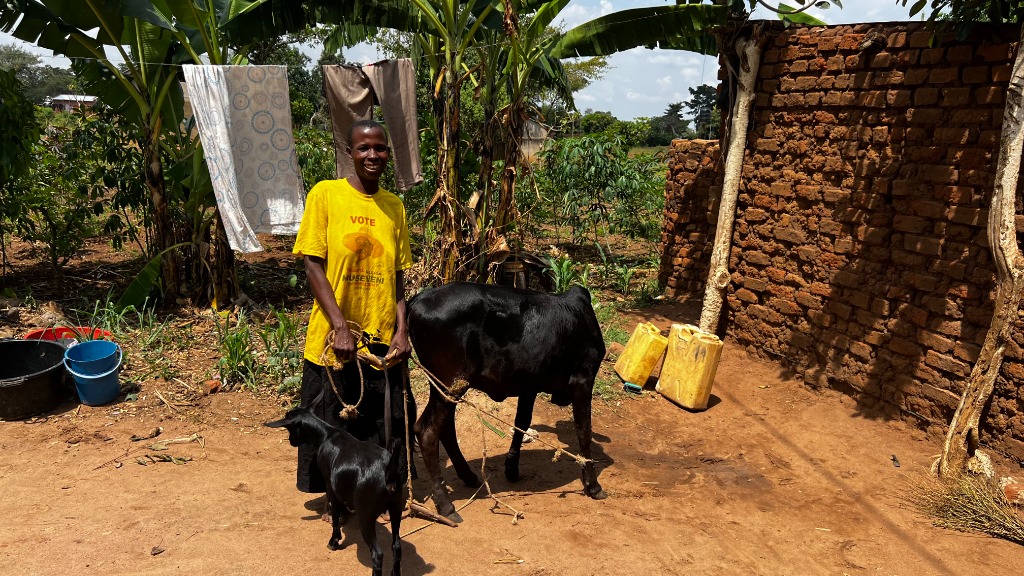
From Two Goats to a Cow: How a Namutumba Mother Secured Her Children's Future
After drought forced tough decisions, a mother in Namutumba turned two GVC goats into seven, paid a neighbor fine, and bought a cow to support two children with special needs.
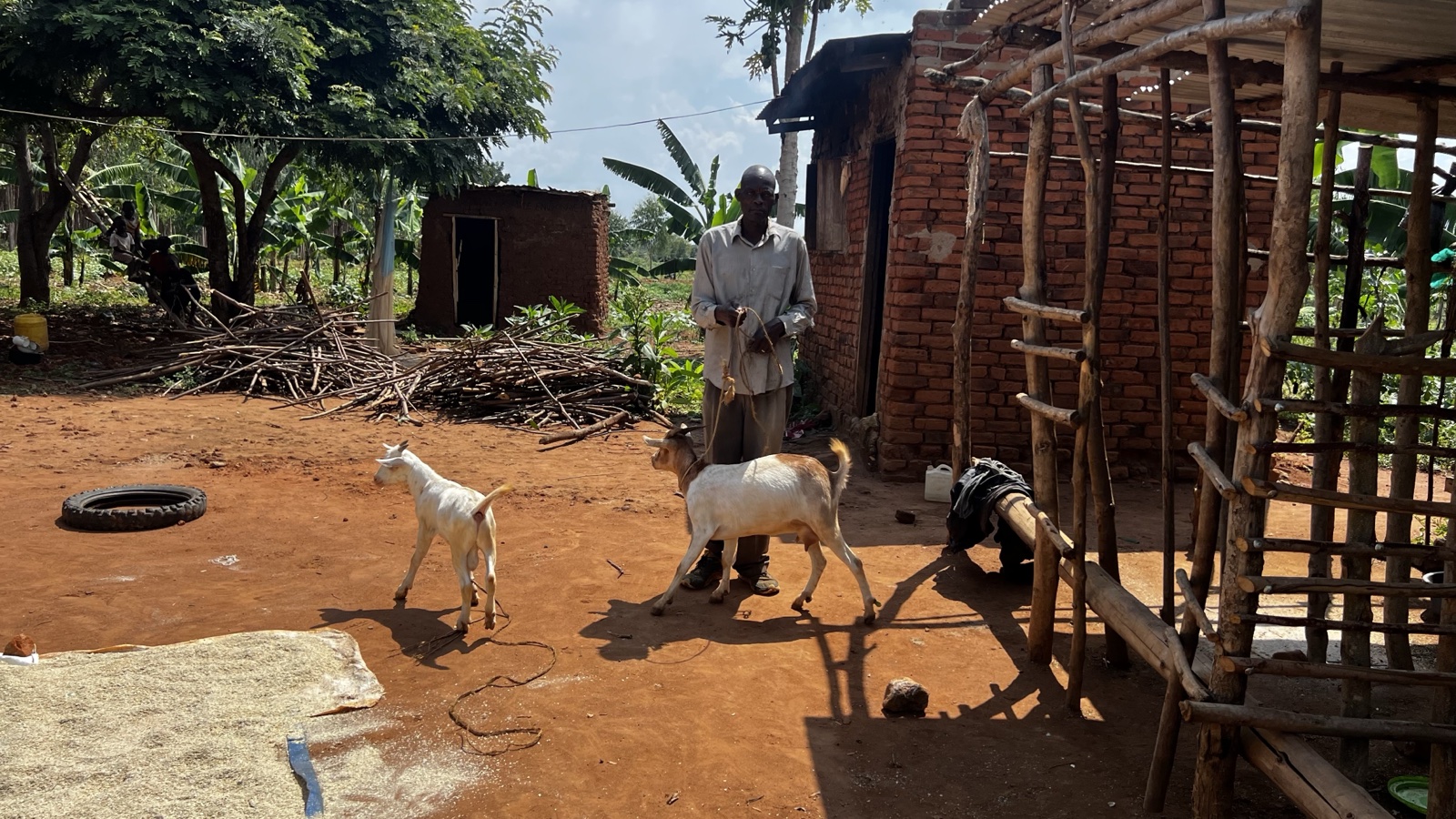
A mother in Namutumba, Eastern Uganda, carries responsibility for a large household that includes Steven David and Mbago Hasa. Two of her children have special needs: one lives with an intellectual disability, and another child is deaf. Caring for their medical requirements and school fees demands dependable family assets.
To assist the household, Global Village Connect provided two female goats through the Give a Goat program. The initiative supports GVC’s mission to equip vulnerable families with living assets that multiply over time. (Learn about how livestock builds household safety nets in GVC’s field notes on gifting goats).
Herd growth and a drought crisis
The mother cared for the two animals with dedication. Over consecutive seasons, the goats reproduced, adding five kids to the homestead and expanding the herd to seven animals.
A prolonged dry spell struck the Namutumba district, drying out pastures and wiping out local fodder. Goats require open ground to forage for grass and shrubs. Driven by hunger during the drought, several goats broke into a neighbor’s garden and ate the neighbor’s crops.
The Local Council Chairman summoned the mother and issued a fine of UGX 160,000 (about $43 USD) for the crop damage. Without cash savings, she faced potential arrest or property seizure.
Trading up from goats to cattle
The mother made a strategic calculation. Keeping six roaming goats in a drought risked repeated fines and neighbor hostility. Selling the animals offered a path out of debt and a chance to upgrade her farm assets.
She took six goats to the livestock market and sold them for UGX 800,000 (about $215 USD). She handed UGX 160,000 (about $43 USD) to the local chairman to clear the crop fine. She took the remaining UGX 640,000 (about $172 USD) straight to a cattle breeder and purchased a healthy young cow.
Securing milk and school fees at home
A cow provides distinct advantages over a free-roaming goat herd:
- Zero-Grazing Security: Cattle can stay tethered at the homestead. The family cuts grass from nearby paths and feeds the cow at home, removing the danger of garden damage.
- Disease Resistance: Local cattle breeds withstand common regional livestock illnesses.
- Daily Nutrition: After calving, the cow will produce fresh milk every morning to nourish her children.
- School Funding: Surplus milk sales will generate daily cash to purchase specialized school supplies, uniforms, and tuition for school.
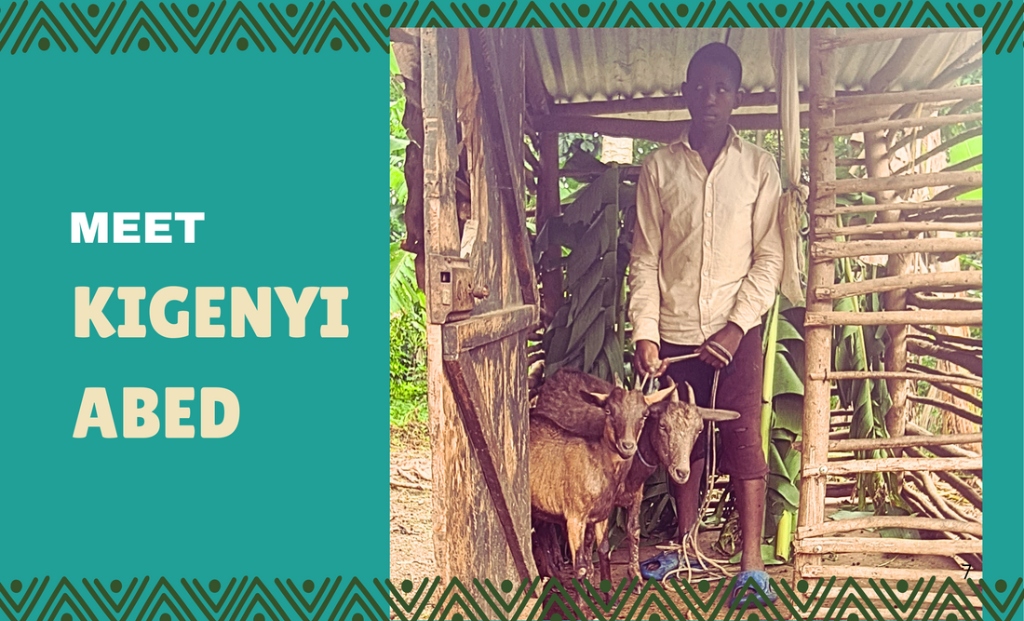
Her decision echoes the asset management strategies of GVC livestock recipients like Abed, the JJ Goat Family, and Miriam. Today, the mother tends her young cow alongside her one remaining goat, protecting her children’s future through practical homestead farming.
To help GVC deliver more breeding goats to rural families in Eastern Uganda, please visit our donation page.