Meet Bernard Kato: From Sudden Loss to Second-Generation Hope with a Surviving Kid
After an unknown illness took their original breeding doe, a family in Eastern Uganda protected her sole surviving kid to maturity. Now a mother with a healthy two-month-old kid, the doe anchors the family goal to fund school fees for Bernard term after term.
In rural Eastern Uganda, a family’s path out of poverty often rests on the back of a single animal. The family of Bernard Kato received a fertile female goat through Global Village Connect’s Give a Goat program. The initiative supports GVC’s mission to provide vulnerable households with self-multiplying assets that turn into education, medicine, and food.
Sudden disaster struck the homestead. An unknown illness hit the mother goat without warning, and the animal died within days. In a rural village without animal clinics, losing a primary breeding doe can shatter a household’s financial plans.
A vital spark of hope remained. Before the mother goat died, she had given birth to a single kid.
Raising a survivor to maturity
The family refused to give up. They focused their energy on keeping the orphaned kid alive, constructing a sturdy timber pen to shield the animal from rain, cold winds, and predators. They gathered fresh tree foliage, provided clean water, and monitored the young animal through every stage of growth.
Care and persistence paid off. The young goat grew into a strong, healthy adult doe.
Second-generation birth brings renewed momentum
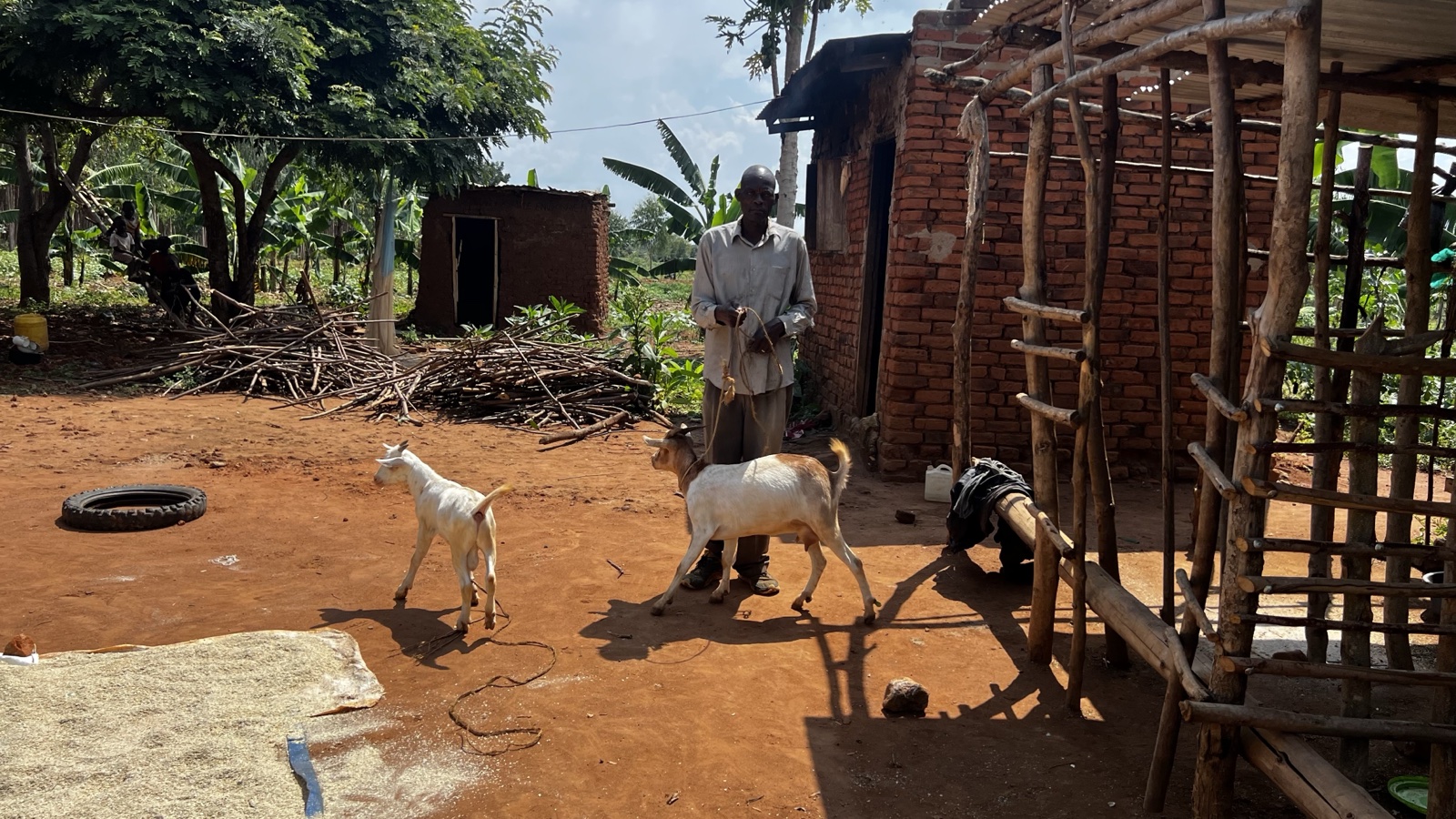
Patience brought a breakthrough. The surviving doe gave birth to her first kid. Today, that kid is two months old, energetic, and feeding well beside her mother in the home compound.
The homestead once faced total loss. Today, two healthy animals stand in the yard: an experienced breeding doe and her growing offspring.
Funding education term after term
The family keeps close watch over both animals to protect their herd growth. Livestock sales offer one of the most reliable methods for rural parents to cover educational costs at school.
A healthy market goat in Eastern Uganda commands between UGX 150,000 and UGX 200,000 (about $40 to $53 USD). The family’s plan centers on disciplined multiplication:
- Breeding doe retention: The mature doe stays at home to continue producing new kids each season.
- Term fee coverage: As the herd expands, the family plans to sell one goat each academic term, generating cash for Bernard’s tuition fees, exercise books, uniforms, and pencils.
- Emergency reserve: Additional animals provide an asset buffer against crop failure or medical bills.
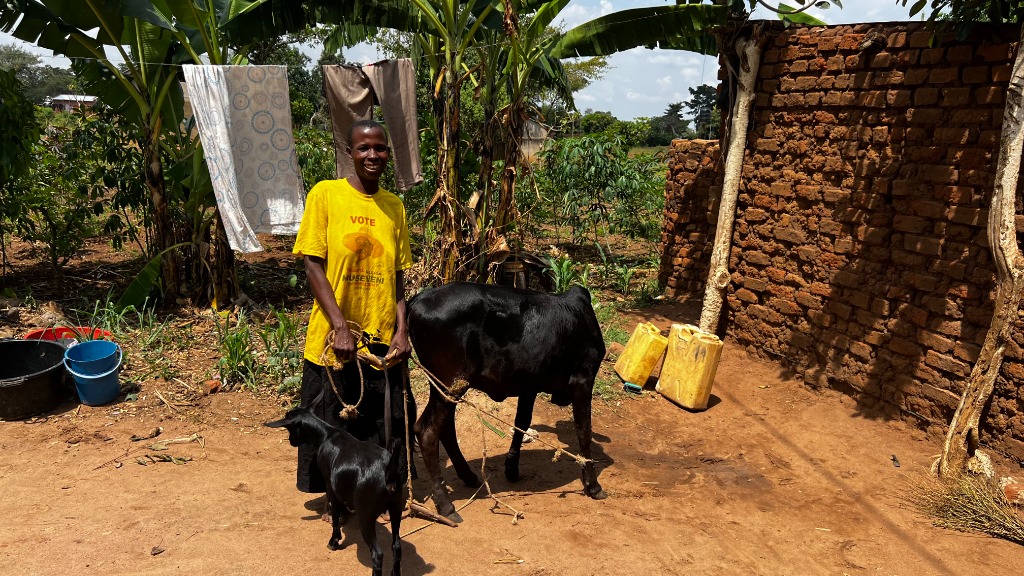
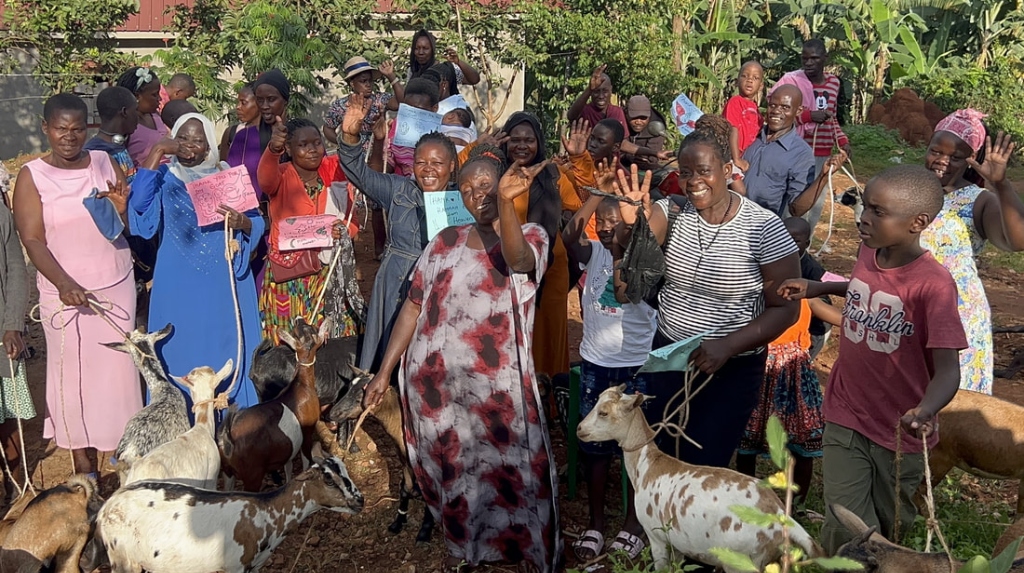
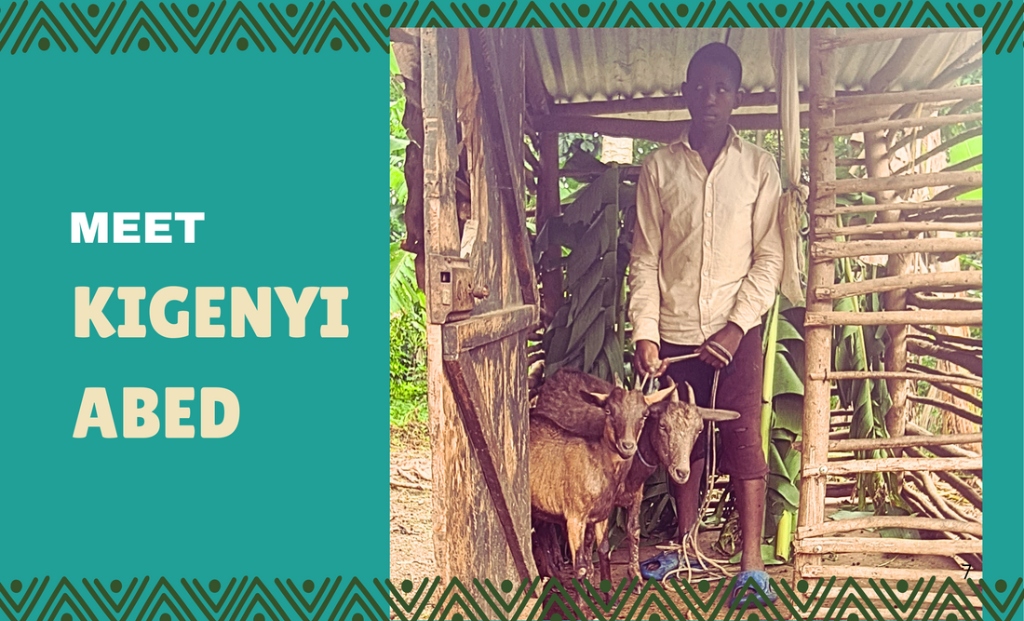
Bernard’s family demonstrates the resilience seen across GVC livestock households: including Abed, who sold goat offspring to fund primary school tuition, and the Namutumba mother who multiplied two goats into seven before purchasing a dairy cow. (Read more about livestock safety nets in our field notes on gifting goats).
The first goat died, but her kid survived and gave birth. Our entire focus is protecting these animals so Bernard never misses a term of school.
(Family of Bernard Kato, shared with GVC’s field team)
To help Global Village Connect place breeding goats with rural families across Eastern Uganda, please visit our donation page.