Meet Evelin Gimono: How Selling Fabric Slices Built a Thriving Charcoal Business in Bududa
Evelin Gimono used GVC business training and UGX 150,000 (about $40 USD) from selling three fabric pieces to build a charcoal retail business, earning daily profit to educate her six children.
Thirty-eight-year-old Evelin Gimono cares for six school-age children in Bududa, Eastern Uganda. Her household faced intense hardship after her husband lost his job. Without steady income, the family lacked dependable food, medicine, and school fees. Some neighbors gossiped about her financial struggles, adding painful humiliation to her family’s burden.
A local church leader told Evelin about Global Village Connect’s community development program. The initiative advances GVC’s mission to help families break dependency through practical trade skills. Evelin enrolled in the Bududa training cohort to build an independent source of income.
Converting home assets into working capital
Evelin drew direction from the training module on finding capital and starting small. She recognized that startup capital did not require outside wealth. Instead, she could convert existing household items into working funds.
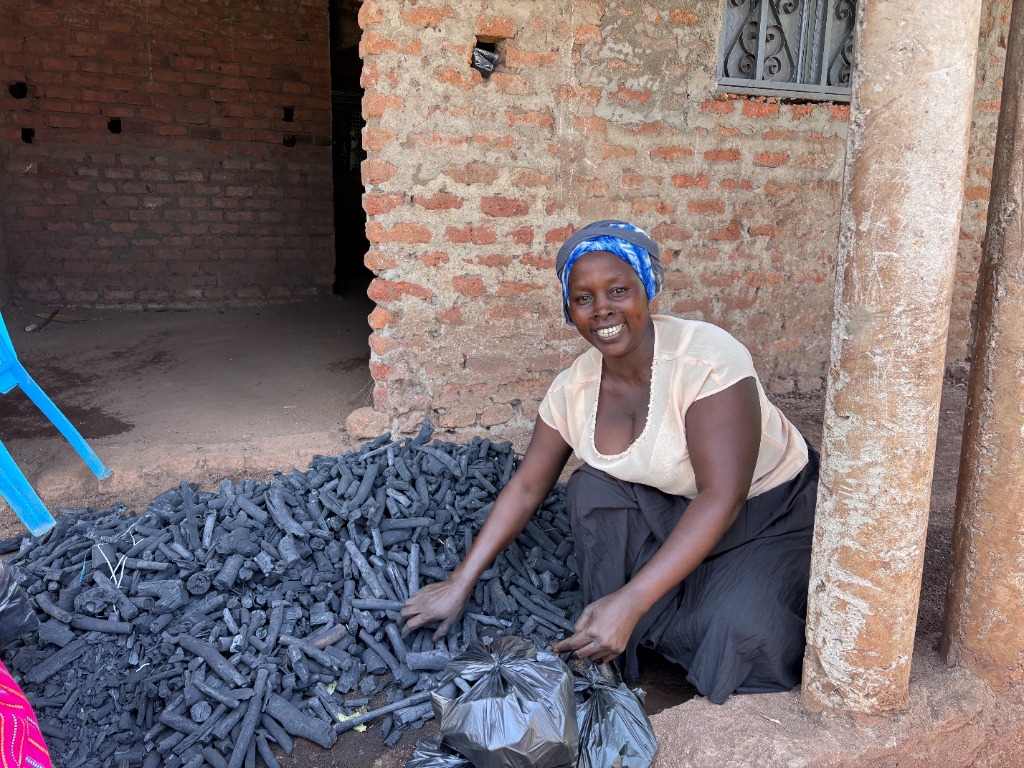
Two years prior, Evelin had bought three pieces of Ankara fabric during a trip to Kenya. She decided to sell those three fabrics, raising UGX 150,000 (about $40 USD) in starting money. She invested the money in a wholesale sack of charcoal and bought polythene packaging bags, planning to sell affordable portions at UGX 1,000 (about $0.27 USD) each.
First-day courage and family support
Beginning the retail trade brought apprehension. Evelin worried whether market shoppers would buy her bags. Her sister-in-law arrived to help package the charcoal lumps and encouraged her to stand firm.
Customers noticed the convenient portion sizes and clean bags. On day one, Evelin sold eight packs, generating UGX 8,000 (about $2.15 USD) in gross sales and UGX 4,000 (about $1.08 USD) in net profit.
By the end of her first week, Evelin had saved UGX 20,000 (about $5.40 USD) from her sales. She took those savings to the local market and purchased a pair of school shoes for her son. Seeing her son’s excitement confirmed that her business could sustain her family.
“I sold three pieces of fabric from my cupboard to buy my first sack of charcoal. People in my village who used to laugh at my poverty now see me working every day to provide for my children.”
— Evelin Gimono (shared with GVC’s field team)
Daily profit, disciplined savings, and school support
Evelin generates an average daily profit of UGX 5,000 (about $1.35 USD). She manages this daily return through a strict division:
- Family Food and Essentials: Evelin allocates UGX 2,000 (about $0.55 USD) each day to buy fresh ingredients and medicine for her six children.
- Disciplined Savings: She sets aside UGX 3,000 (about $0.80 USD) every single day to purchase inventory and buffer against household shocks.
- School Supplies: Her earnings cover exercise books, pens, and uniform requirements, keeping her children engaged at school.
Her retail model mirrors the small-portion household energy trade run by charcoal merchant Gladys Muduwa and firewood vendors Susan Namutibwa and Lukia Asio.
Restored respect and wholesale ambitions
The business changed Evelin’s standing in Bududa. Community members who once mocked her hardship now treat her with respect as an active merchant. Her household stress eased because she controls a reliable source of daily food.
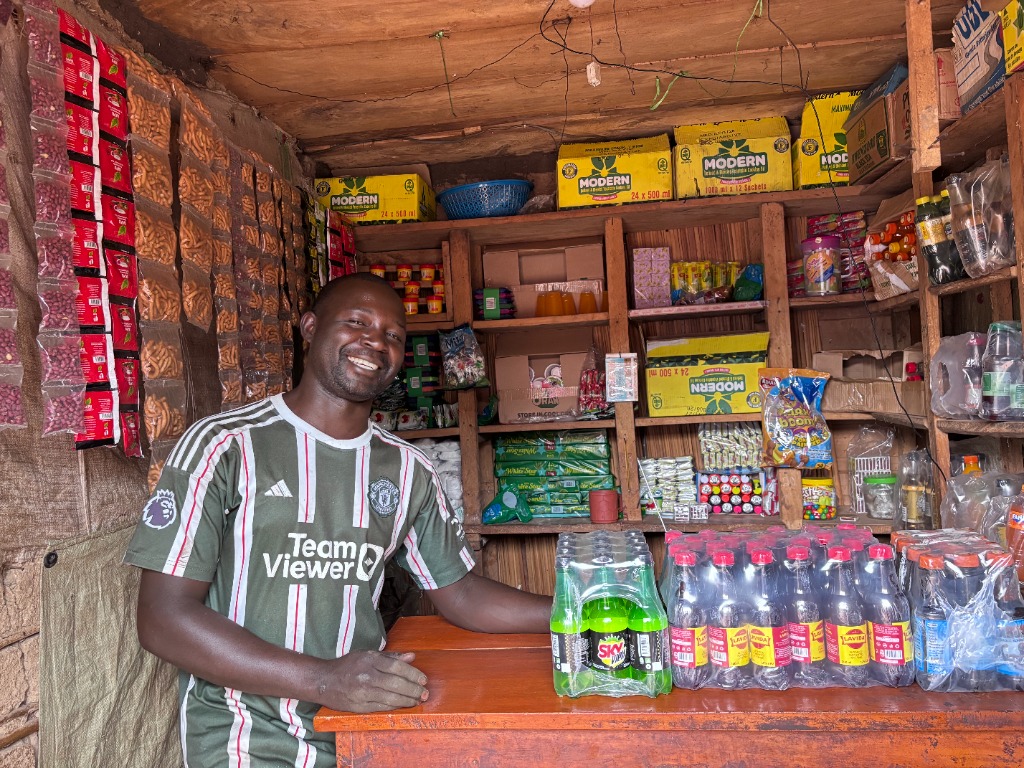
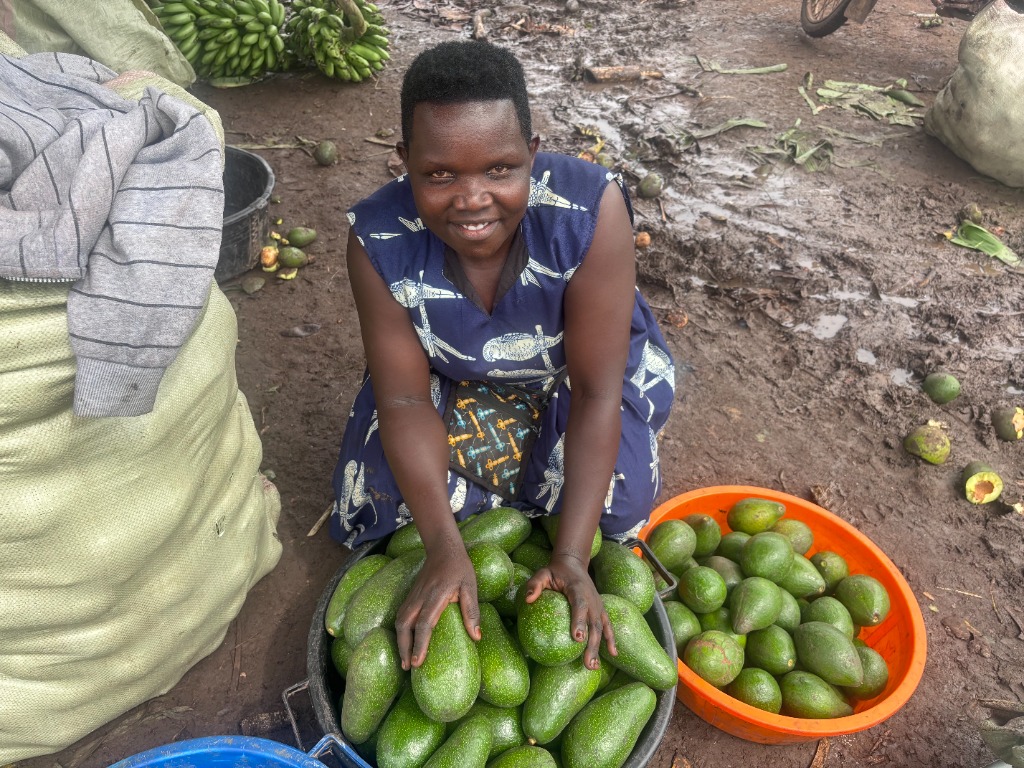
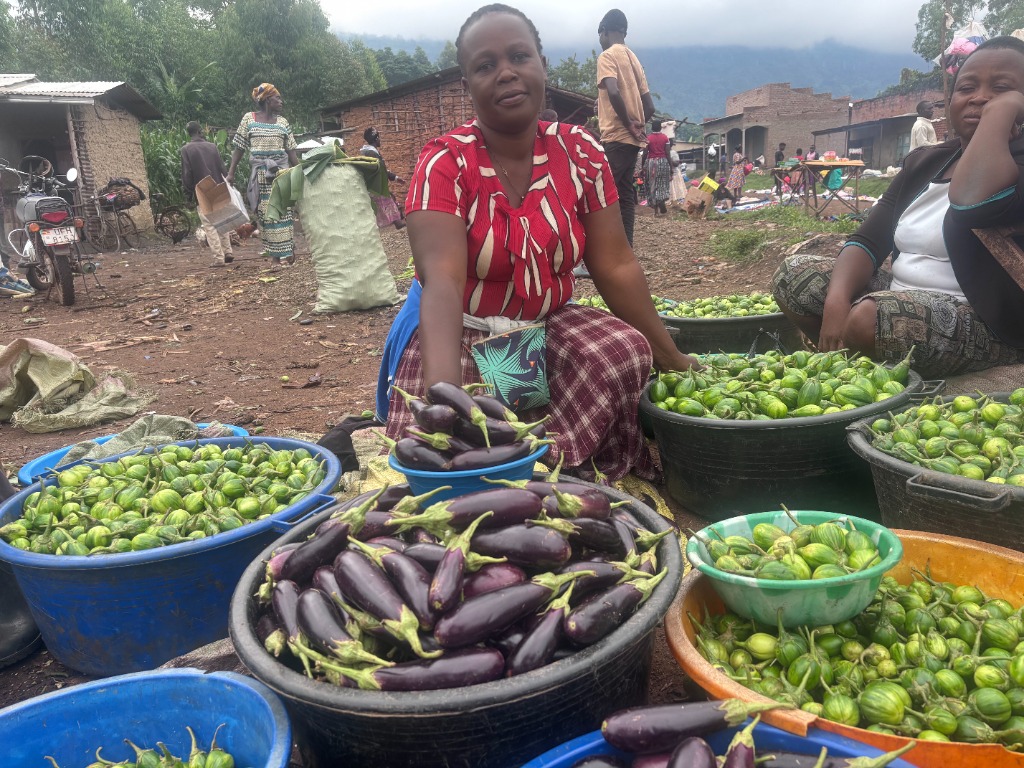
Evelin plans to expand her operations. She saves money each week to build a permanent kiosk structure and become a wholesale charcoal supplier for neighborhood retailers. Her expansion follows the path of regional GVC entrepreneurs such as market vendor Christine Nadunga, food kiosk owner Annet Nelima, avocado retailer Annet Namono, and kiosk merchant Edith Namataka. (Read more on how family stability keeps Ugandan students in class in our field notes on school attendance).
To help GVC train more mothers like Evelin to start small enterprises, please visit our donation page.