Meet Monica: How Your Support Unlocked Chicken Cooperative Dividends for Her Son's School Fees
Because of you, 36-year-old Monica paid her eldest son's secondary school fees in full using poultry collective dividends.
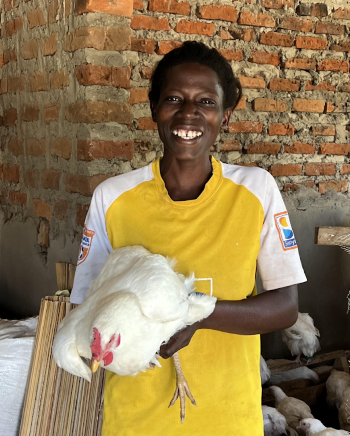
At 36 years old, Monica is both a devoted mother of six children and a proud, highly active member of the Mothers Yes We Can Chicken Farm cooperative in Namutumba, Uganda.
Since joining this community led project, Monica’s life has taken a powerful, positive turn, providing her family with long term financial stability and a bright, secure future.
The power of cooperative dividends
Before joining the collective, Monica faced the same systemic struggles as many mothers in rural eastern Uganda, where stable jobs are rare and household income is unpredictable.
Through GVC’s Community Development Program, Monica and her cooperative members learned how to collectively manage, budget, and grow a commercial poultry enterprise.
In December, the cooperative celebrated a major milestone by distributing its hard earned farm dividends. Monica immediately put her share of the profits to good use, paying the high tuition fees required for her child in secondary school.
Secure education, peaceful mind
For a mother of six, paying school fees in full at the beginning of the term represents a massive, life changing relief. Secondary education in Uganda is a vital stepping stone out of poverty, but the costs of school fees, supplies, and uniforms are often out of reach for rural farming families.
“Before joining the group, I always worried about how I would afford school fees. Now, I know my son’s education is secure, and I can focus on providing for my other children.”
— Monica, member of Mothers Yes We Can With her eldest son’s education fully funded, Monica no longer carries the daily stress of tuition deadlines and can focus her energy on nurturing her five younger children.
Real economic independence
The Mothers Yes We Can poultry farm has provided its members with far more than just a steady dividend check; it has delivered genuine economic independence and confidence.
By working together to raise hundreds of chicks, manage feed supplies, and negotiate sales in local markets, these women have proven that cooperative business structures are a highly sustainable path out of poverty.
Monica’s success has inspired her neighbors, and she hopes that many more vulnerable women in Uganda will have the opportunity to join similar cooperative programs and build their own independent futures.